
Universal Music - March Music Challenge
- Technology Advisors
- Tech Development Team
- Creative Direction and Design
Overview
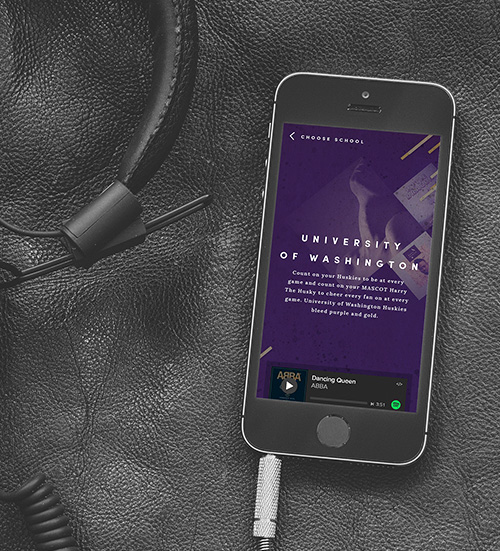
Universal Music Group is home to the world’s largest catalog of recorded music. Genome was commissioned to produce a responsive destination for their March Music Challenge for the second time since 2014. Built with brackets containing music from various schools in the US, Universal Music Group aimed to capture consumer data while increasing fan engagement by turning their focus toward streaming, the dominant means of consuming music.
UX / UI
This experience was aimed at enticing college students to play and share custom Spotify playlists that represented their schools. Our high-fidelity wireframes provided a clear idea of the content required for this step-by-step composition.
Website
More Examples

Case study
Bracket season meets streaming: UMG's March Music Challenge
Universal Music Group, home to the world's largest catalog of recorded music, commissioned Genome to produce a responsive destination for its March Music Challenge, the second time Genome had been brought in for it since 2014. Genome provided technology advisory, a development team, and creative direction and design for the campaign.
The format borrows the tournament bracket, with music from various schools in the US matched up against one another. UMG had two goals: capture consumer data, and increase fan engagement by turning attention toward streaming, the dominant way people consume music. The design problem was making data capture and streaming feel like part of the game rather than hurdles placed in front of it.
Brackets work because they are familiar. Most visitors already understand how matchups advance, so the interface can spend its effort on the music instead of explaining rules. Organizing the catalog around schools gives fans a personal stake, since people tend to back the schools they know, and that loyalty gives them a reason to come back as the bracket moves forward.
A responsive build was essential for a challenge that fans are likely to follow from their phones. Keeping the path from a matchup to the music short supports the streaming goal directly. The aim with data capture was to place it at natural points in participation, so the challenge could gather information without interrupting the competition itself.
Returning to the challenge let UMG build on a format fans had seen before rather than introducing a new mechanic. The destination gives the label a seasonal way to put its catalog in front of listeners, connect that attention to streaming, and grow its consumer data around a game people choose to play.
Compare this campaign participation case study with other digital work, explore the supporting services, or read the studio journal for practical thinking about products and experiences. To discuss a similar challenge, visit contact.